Cart 0
How Cigars Became a Symbol of Power & Politics
Few objects carry as much symbolic weight in the world of power and politics as the cigar. Long before it became a marker of luxury or leisure, the cigar was already entwined with authority, negotiation, and image-making. From the smoke-filled rooms of American political conventions to the defiant gesture of a Caribbean revolutionary, cigars have quietly shaped, and been shaped by, some of history’s most consequential moments.
The Birth of the “Smoke-Filled Room”
In American political history, few phrases capture backroom power dynamics quite like “smoke-filled room.” The term traces back to the 1920 Republican National Convention, when party leaders reportedly gathered in a hotel suite, cigars in hand, to negotiate the nomination of Warren G. Harding. Whether or not the meeting happened exactly as legend describes, the phrase stuck, cementing the Cigar as visual shorthand for private deal-making among powerful men.
This association wasn’t accidental. Cigars, unlike cigarettes, require time. A good cigar can take an hour or more to smoke properly, making it a natural companion to long conversations, negotiations, and the kind of unhurried decision-making associated with those who held real influence. The cigar became less about the tobacco itself and more about the room it represented: exclusive, deliberate, and closed to outsiders.
Winston Churchill and the Cigar as Identity
Perhaps no political figure is more closely associated with cigars than Winston Churchill. Throughout his career as Britain’s wartime Prime Minister, Churchill was rarely photographed without one, and the image became inseparable from his public persona: defiant, resolute, unshaken even under the pressure of world war.
Churchill reportedly smoked Cuban cigars almost exclusively, and his patronage helped cement Cuban tobacco’s reputation among European elites during the mid-20th century. The Romeo y Julieta brand, in particular, is often linked to Churchill, and a large cigar size was later named the “Churchill” in his honor, a format still widely produced and recognized today. His cigar wasn’t just a personal habit; it became a piece of wartime iconography, projecting calm authority during Britain’s darkest hours.
Fidel Castro and the Politics of Prohibition
Few chapters in cigar history are as politically loaded as the relationship between Fidel Castro and the very industry his revolution transformed. After nationalizing Cuba’s cigar production in 1959 and 1960, Castro became an unlikely global symbol for Cuban tobacco himself, frequently photographed with a cigar, reinforcing its association with Cuban national identity even as his government seized private factories from families who had built the industry.
The irony deepened in 1962, when the United States, locked in escalating tension with Castro’s government, imposed a trade embargo that famously banned Cuban cigar imports. According to widely circulated accounts, President Kennedy asked an aide to source a large personal supply of his favorite Cuban cigars just hours before signing the embargo into law, a story that, true or not, captures the strange duality of Cuban cigars as both a symbol of resistance to American policy and an object of desire within America itself.
Castro reportedly gave up cigars later in life for health reasons, but the political entanglement between Cuban tobacco and American foreign policy remains active even today, with import restrictions shifting periodically depending on the diplomatic climate between the two nations.
Diplomacy, Gift-Giving, and the Language of Cigars
Beyond individual political figures, cigars have long served as instruments of diplomacy. Presenting a fine cigar has historically functioned as a gesture of goodwill, respect, or camaraderie between leaders and dignitaries, not unlike the exchange of fine wine or spirits in other cultures.
This tradition persists in modern diplomatic circles, where premium cigars are sometimes exchanged during state visits or high-level negotiations as a gesture of mutual respect. The unhurried, ceremonial nature of cigar smoking lends itself naturally to this kind of symbolic exchange, transforming a simple product into a subtle form of political communication.
The Cigar in Corporate and Financial Power
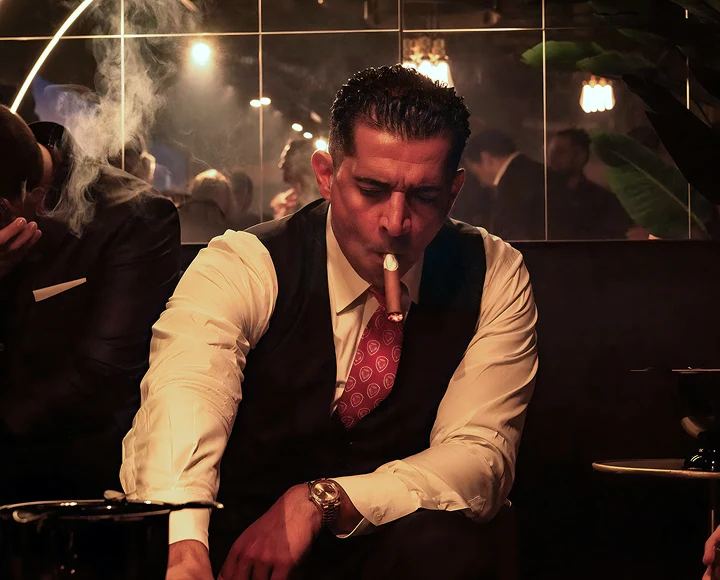
Beyond formal politics, cigars became closely tied to financial and corporate power throughout the 20th century, particularly on Wall Street and in boardrooms across major business capitals. The image of a cigar-smoking executive, closing a major deal or celebrating a lucrative acquisition, became a staple of American business culture and popular media alike.
This association reinforced the cigar’s broader symbolic role: a marker not just of political power, but of financial success and dominance. Celebratory cigars after major business wins, IPOs, mergers, or acquisitions, became something of a ritual in certain circles, further embedding the product into the cultural language of achievement and status.
Cigars in Film and Popular Culture
Hollywood played no small role in reinforcing the cigar’s association with power. From gangster films depicting cigar-chomping crime bosses to political dramas featuring world leaders deliberating over war and peace with a cigar in hand, popular media consistently Used Cigars as visual shorthand for authority, confidence, and control.
This cultural reinforcement created a feedback loop: real political and business figures adopted cigars partly because of their cultural association with power, while film and media continued to draw on real figures like Churchill for inspiration, further cementing the symbol in the public imagination.
A Symbol That Persists
Even today, despite shifting attitudes toward tobacco and health, the cigar retains much of its symbolic power. It still appears at celebratory moments, whether a business milestone, a political victory, or a personal achievement, precisely because of the cultural weight it has carried for well over a century.
The cigar’s association with power was never really about the tobacco itself. It was about time, ritual, and exclusivity, qualities that align naturally with how societies have long signaled status and authority.
From Churchill’s wartime defiance to Castro’s revolutionary iconography, from smoke-filled political conventions to Wall Street celebrations, cigars have occupied a unique space in the history of power. They are, in many ways, a physical embodiment of deliberation, status, and ritual, a symbol that has outlasted the very eras that first gave it meaning.
At Cingari, we understand that a cigar is never just tobacco, it’s a piece of history and symbolism you can hold in your hand. Explore our curated collection and discover a tradition that has shaped power and prestige for generations.